Confía en los datos, no en las palabras. Revisa el historial de cualquier coche en segundos
Un reporte puede revelar:
- Imágenes reales del vehículo
- Imágenes del historial del vehículo
- Daños reportados
- Registros de robo
- Restricciones financieras (embargos)
- Exposición a desastres naturales
- Calificaciones de seguridad
- Valor actual de mercado
- Impuestos por emisiones
- Especificaciones y equipamiento
- y mucho más...
Por qué los compradores inteligentes empiezan con carVertical
Un informe de historial vehicular de carVertical es el primer paso para saber qué vale tu dinero, qué vale tu tiempo, y qué te permite tomar la mejor decisión final.
Evita errores costosos
Detecta daños previos, manipulación del kilometraje u otros problemas graves a tiempo y aléjate de vehículos que podrían costarte miles más adelante.
Encuentra el auto correcto más rápido
Evita pruebas de manejo innecesarias revisando los hechos en línea y solo inspeccionando los autos que realmente valen tu tiempo.
Saber más, pagar menos
Conoce la historia real del auto, sabe más de lo que el vendedor espera y usa los hechos para negociar un mejor precio.
Revisamos lo que los vendedores no te cuentan
carVertical analiza más de mil millones de registros verificados para ayudarte a reducir el riesgo de comprar un auto usado – en solo 40 segundos.
Detecta daños y siniestros totales
Revisamos más de 330 millones de registros para mostrarte dónde y cuándo ocurrió el daño.
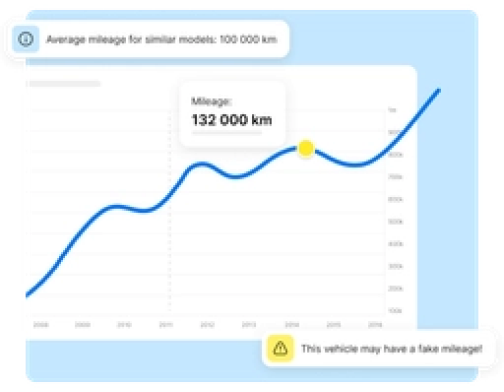
Verifica el kilometraje real
Verifica fácilmente el kilometraje real del vehículo con fuentes de datos confiables.
Conoce el auto por dentro y por fuera
Consulta los detalles técnicos y el equipamiento original de fábrica.
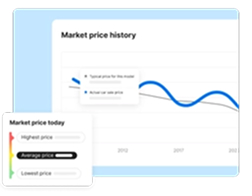
Sabe cuánto vale realmente
Compara el precio con autos similares en tu zona.
Evita autos con títulos marcados
Identifica títulos de salvamento o chatarra antes de comprar.
Verifica si el auto es seguro para conducir
Consulta las calificaciones de seguridad en pruebas de choque de agencias confiables.
Oferta especial
Obtén un paquete de informes de historial vehicular – revisa más autos por menos dinero, compara sus historiales y elige la mejor opción.
MÁS POPULAR

Estándar
La mejor relación calidad-precio
¿Cómo funciona?
Descubre qué revisamos, qué tan rápido sucede y qué obtienes a cambio:

Ingresa el VIN o la matrícula (REG)
Comienza ingresando el código VIN de 17 caracteres o el número de matrícula del vehículo. Ambos nos permiten rastrear su historial completo.

Revisamos datos verificados de todo el mundo
Escaneamos más de 1000 fuentes de datos en más de 45 países — incluyendo registros de seguros, policía y matriculación — para descubrir cualquier problema oculto.

Paga y desbloquea tu informe completo del historial del vehículo
Una vez realizado el pago, generamos el informe del historial del vehículo.
Tu reporte completo estará listo en tan solo 40 segundos.

Deja que los datos guíen tu decisión
Usa el informe del historial del coche para decidir si comprarlo, negociar un mejor precio o seguir buscando.
Transformando datos en decisiones más inteligentes
En 2025, hemos ayudado a millones de conductores a navegar el mercado de autos con inteligencia y confianza.

4,700,000+
Vehículos revisados

142,494
Vehículo revisado encontrado

1,997,9282
Vehículos dañados detectados
Escucha a personas como tú
Descubre por qué están usando carVertical para hacer compras de autos más inteligentes.

Me salvó de comprar un coche con kilometraje manipulado. El informe fue instantáneo e increíblemente completo; nunca más compraré un coche usado sin consultar carVertical antes. Una herramienta imprescindible para cualquier comprador serio.

Muy tranquilizador antes de comprar un vehículo usado. El sitio ofrece muchas maneras de conectarse con diversas estructuras de verificación. Informe muy detallado y completo.

CarVerticals reveló que el auto había sufrido un accidente grave, algo que el concesionario ocultó por completo. Me ahorró miles de dólares. Este servicio se amortiza al instante.
Frequently asked questions
1. How does the carVertical service work?
carVertical helps you uncover a vehicle’s history by collecting data from trusted sources worldwide, and compiling it into an easily-readable vehicle history report.
How are carVertical reports created?
Our system gathers data from over 1000 sources, including government registries, damage data databases, law enforcement agencies, and more. Here’s how it works:
A
VIN
(Vehicle Identification Number) is a unique 17-character code assigned to every vehicle.
It serves as the car’s fingerprint, containing essential information about its history.
When you enter a VIN on our website, our system uses it to search for records in various databases across 45+ countries. We typically check:
- State registries
- Damage databases
- Law enforcement agencies
- Auto repair shops & service logs
- Connected vehicle fleets, and more.
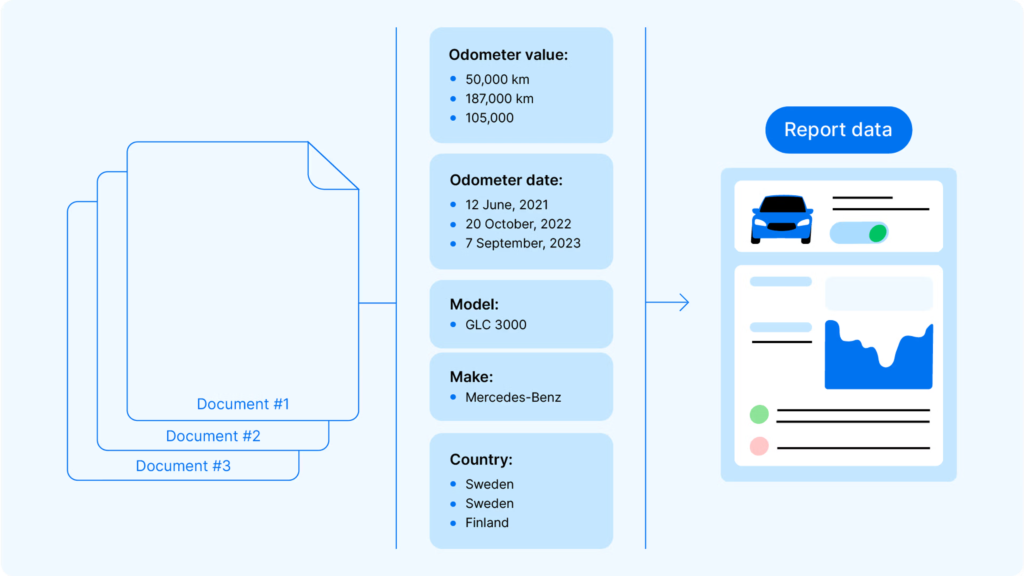
2. carVertical cleans and sorts collected data
The data we receive from these sources is typically raw and requires several steps of processing. We fix errors and inconsistencies, translate the data (if necessary), and sort information into relevant categories.
3. We assign the data into relevant report sections
Once we gather all available records, we group information types into our report sections.
For example, if we have 3 odometer readings and the dates when they were taken, they will appear in the Mileage section of the report. Meanwhile, the technical inspection information will be in the Legal status and Timeline sections, etc.
4. We use statistical models and insights to enrich the report
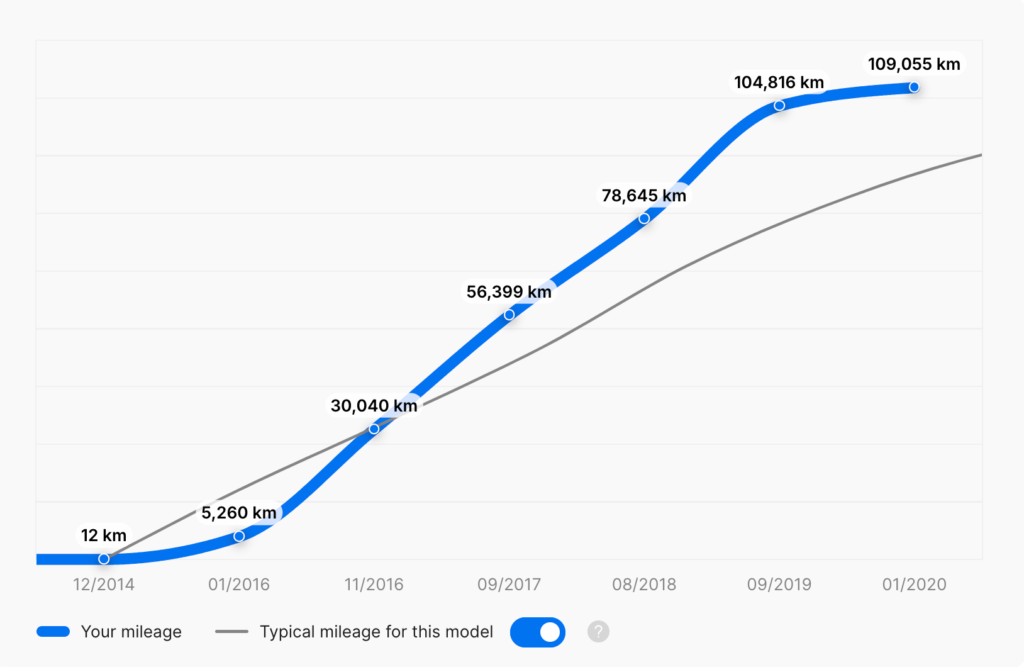
The data has been processed for the carVertical report, but further work is needed using statistical models and other technologies to refine and enhance it. These models help provide insights, such as comparing a car’s mileage with similar vehicles.
5. You receive a comprehensive vehicle history report
Within minutes, your report is ready!
You can review it online, download it as a PDF, and use it to make a well-informed decision before purchasing a used vehicle.
2. What is a VIN ?
A VIN, or Vehicle Identification Number, is a unique 17-character code assigned to every vehicle. It acts as a fingerprint, providing important details about the car, including its manufacturer, model year, production location, and unique serial number.
The VIN is also essential for verifying a vehicle’s authenticity, tracking key events throughout its lifetime, and ensuring it has not been stolen or tampered with.
Where can I find the VIN?
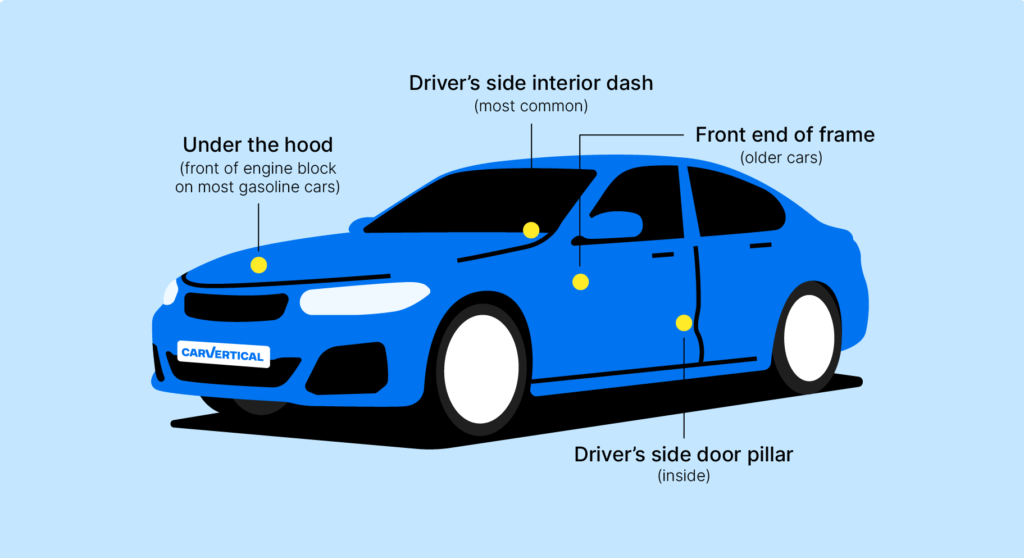
You can locate the VIN on both the vehicle itself and its official documents.
On a car:
- Dashboard – Check the driver’s side near the windshield.
- Driver’s side door pillar – Look along the side pillar of the driver’s door frame, often near the door hinge.
- Front end of the frame – Check the frame near the front of the vehicle, often on the driver’s side, near the wheel well.
- Under the hood – Some manufacturers place the VIN near the engine block
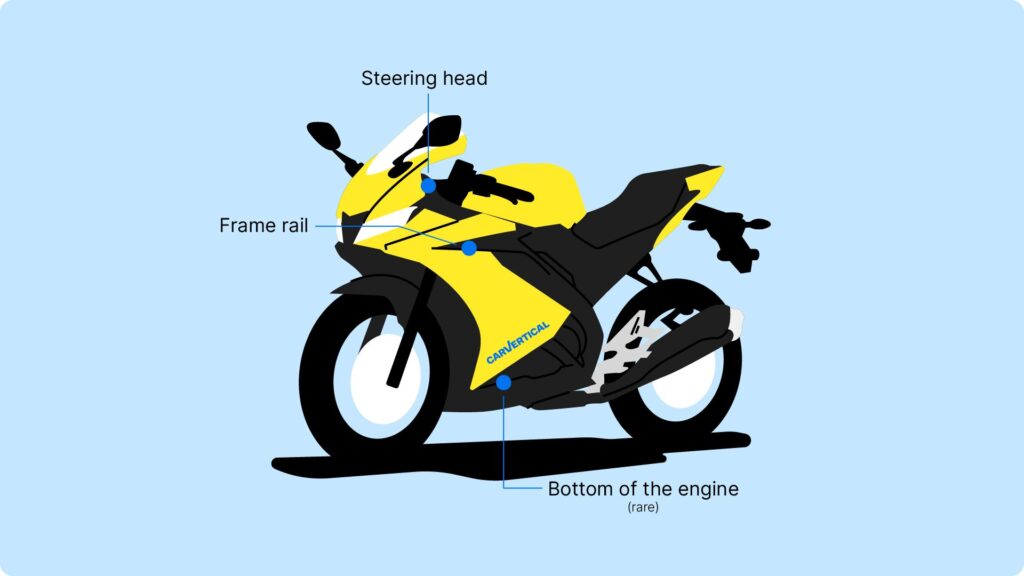
On a motorcycle:
- Steering head (most common) – Typically stamped or engraved on the steering head of the motorcycle, which is the part of the frame that connects to the front fork.
- Frame rail – Some motorcycles may have the VIN located on the frame rail, which is a structural part of the chassis running along the sides of the bike.
- Bottom of the engine (rare) – In rare cases, the VIN may be stamped or engraved on the bottom of the engine.
Tip: The VIN is also printed on official vehicle registration, insurance, and ownership documents. Always ensure the VIN on the vehicle matches the one on the paperwork.
How to decode a VIN
A VIN can be decoded automatically using a VIN decoder or manually by breaking down its structure.
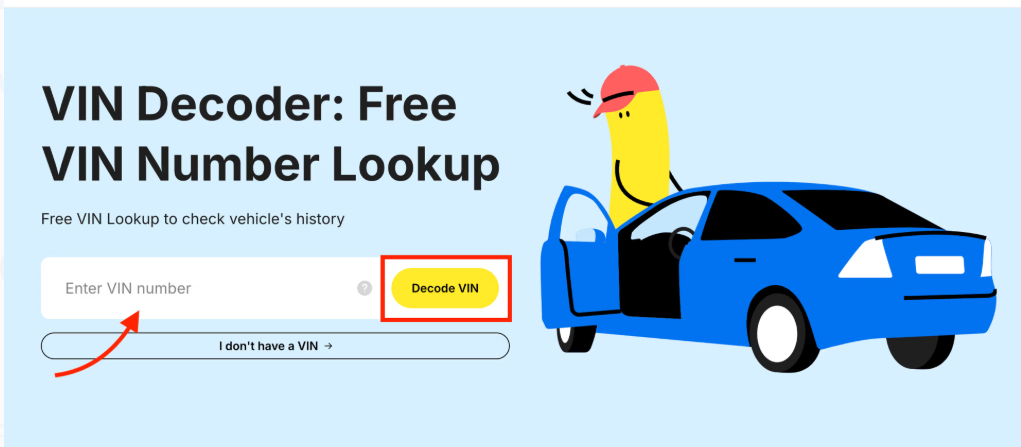
1. Use a carVertical VIN decoder
Just enter the VIN into the carVertical VIN decoder and click Decode VIN.
2. Decode manually
You can also decode a VIN manually if you know what each character represents. However, this can be time-consuming, as manufacturers use different encoding systems for vehicle details.
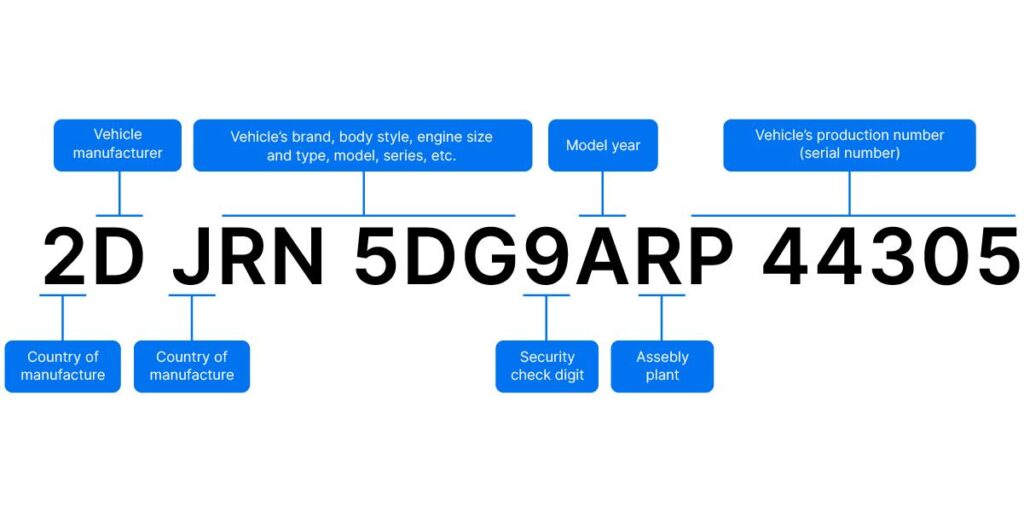
VIN structure breakdown:
- WMI – World Manufacturer Identifier (Characters 1-3): Typically identifies the vehicle’s manufacturer and country of origin.
- VDS – Vehicle Descriptor Section (Characters 4-8): Reveals the vehicle’s brand, body style, engine size, and model type, and similar details.
- Check Digit (Character 9): A security code calculated using a mathematical formula to validate the VIN’s authenticity.
- VIS – Vehicle Identifier Section (Characters 10-17): Characters 10 and 11 indicate the model year and assembly plant, while characters 12 to 17 represent the vehicle’s unique serial number.
How to spot a fake or tampered VIN
A legitimate VIN should always be consistent, clear, and match official records. Here are key warning signs that a VIN might be fake or altered:
- Missing or altered characters
- Physical tampering signs (cratches, uneven paint, altered VIN plate)
- Unusual characters (includes I, O, or Q)
- VIN location mismatch (unusual or non-standard location)
- Check digit mismatch (doesn’t match the calculated value)
- Non-matching documents (VIN on the vehicle doesn’t match the one on its documents), etc.
Always verify the VIN before purchasing a used vehicle to avoid scams.
3. How long will it take to receive my carVertical report?
carVerticals reports are generated almost instantly! You’ll usually receive your report in about one minute or around 40 seconds, to be precise. Our system operates 24/7, allowing you to generate your report anytime, day or night.
Once your report is ready, it will be available in your carVertical account and delivered directly to your email.
4. What information may appear in the carVertical report?
Our data comes from over 1000 trusted sources, including state registries, law enforcement agencies, service records, and other databases. Each report may include different sections depending on the data available for a specific vehicle.
Below is an overview of the key sections that may appear in your report. You can also view a sample report to see what’s typically included and how it looks.